Every logistics emissions tool we tried before building TerraTwin asked us to do the hard part ourselves: clean the data, fill in the gaps, pick the right emission factors, and hope the result would survive an audit.
That's backwards. The whole point of a calculation tool is to absorb that complexity, not pass it on to whoever's stuck reporting Scope 3 logistics emissions at the end of the quarter.
So we built TerraTwin around the idea that messy, incomplete, real-world shipment data should be the default input — not the exception. It accepts spreadsheets in whatever shape they arrive, fills in missing route detail with a Digital Twin of the transport network, and applies emission factors in a way that's transparent enough to hold up under review.
What we're optimising for
- Accuracy that holds up under audit, not just a plausible-looking number
- No rigid templates or specialist expertise required to get started
- Standards alignment (ISO 14083, GLEC, CountEmissionsEU) built in, not bolted on
- Fast enough to run at real shipment volumes, not just for a one-off report
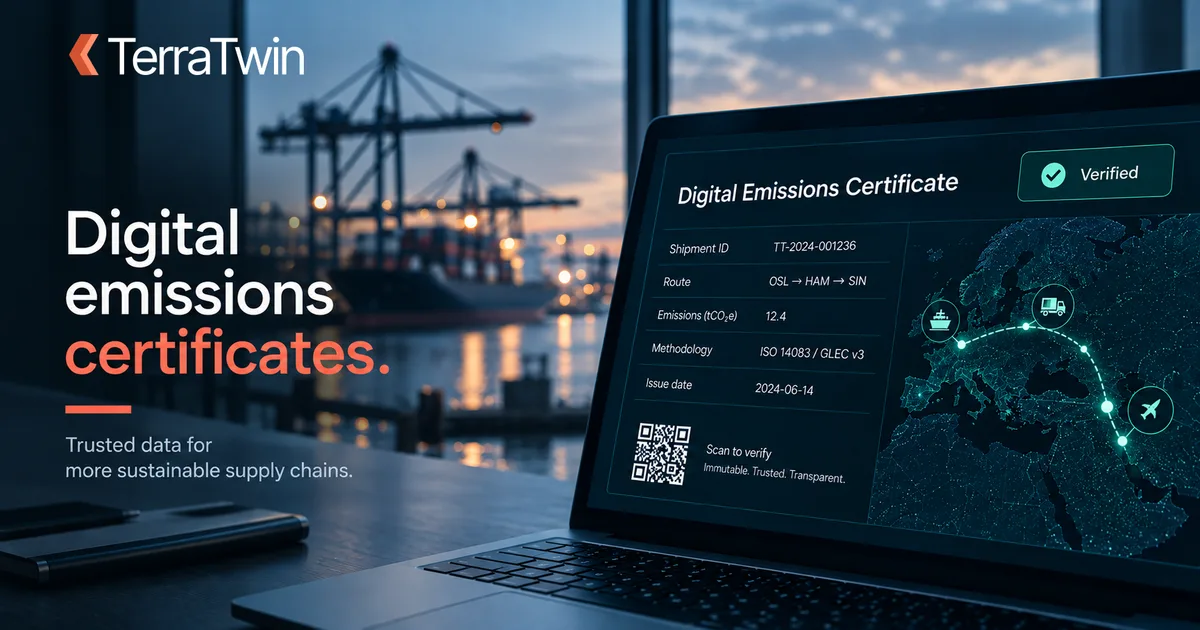
We're still early, but every feature we ship — from the calculation engine to digital certificates — comes back to that same goal: make it easy to get a freight emissions number you can actually trust.